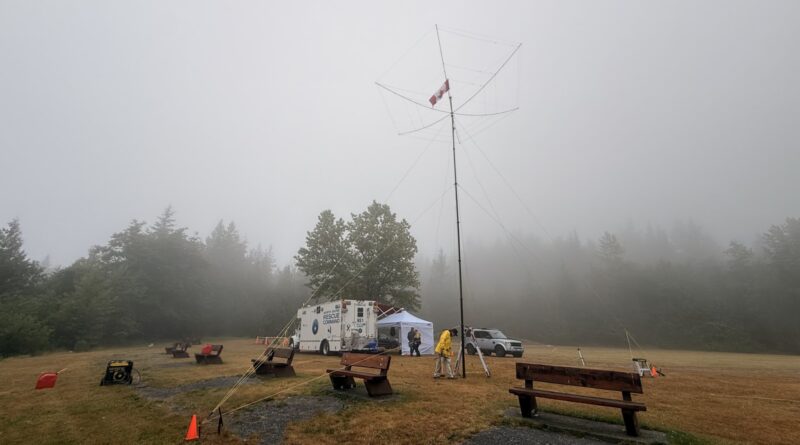
ARRL Field Day 2026 Report by Adam Kriz – VA7KRZ
Field Day 2026 presented a few unique challenges before the first antenna was even raised.
For those new to amateur radio, ARRL Field Day is North America’s largest annual on-air operating event. On the fourth full weekend of June, thousands of clubs and individual operators across Canada and the United States take to the airwaves. Many set up portable stations in parks, fields, and emergency operations centres, practicing the skills needed to establish reliable communications under abnormal conditions using temporary antennas and independent power, while many others participate from their home stations. Part emergency preparedness exercise, part contest, and part open house, stations spend 24 hours contacting as many other Field Day stations as possible.
Each station identifies itself with a designation describing its setup. We operated as VE7NSR, Class 1A, British Columbia section. The “1” means one transmitter, and the “A” means a club portable station operating from a temporary location on independent power. Other classes cover home stations, mobile setups, and emergency operations centres. Every contact exchanges this information, painting a picture of who is on the air and how they are set up, from home operators and modest one-radio efforts like ours to sprawling multi-transmitter operations.
This year’s effort, however, looked quite different from years past.
With labour action affecting access to the club’s normal equipment storage location, Igor (VE7AXO) graciously offered his garage as a temporary staging area for much of the equipment needed for the weekend. Moving the equipment beforehand ensured it remained accessible despite the picket lines and prevented any disruption to the event.
The same uncertainty also influenced one of this year’s major station design decisions. Rather than deploying the club’s radio tower trailer, we elected to build a fully portable station using equipment that could easily be transported in personal vehicles. Had the labour dispute resumed during the weekend, there was concern that the tower trailer might not be able to be returned to storage. The portable station design eliminated that risk while still providing excellent multi-band capability.
Friday – Setup
Janice (VA7JMO) and Vince (VE7NZO) were first on site at 1:15 PM, waiting for Parks staff to unlock the bollards just in time for the arrival of the NS1 North Shore Rescue Command Vehicle, which served as our communications truck throughout the weekend. By the time the rest of us arrived at approximately 2:00 PM, rain was falling on and off. Janice, Vince, and Peter, the driver of NS1, were preparing the vehicle while the rest of us unloaded equipment and began assembling the station.
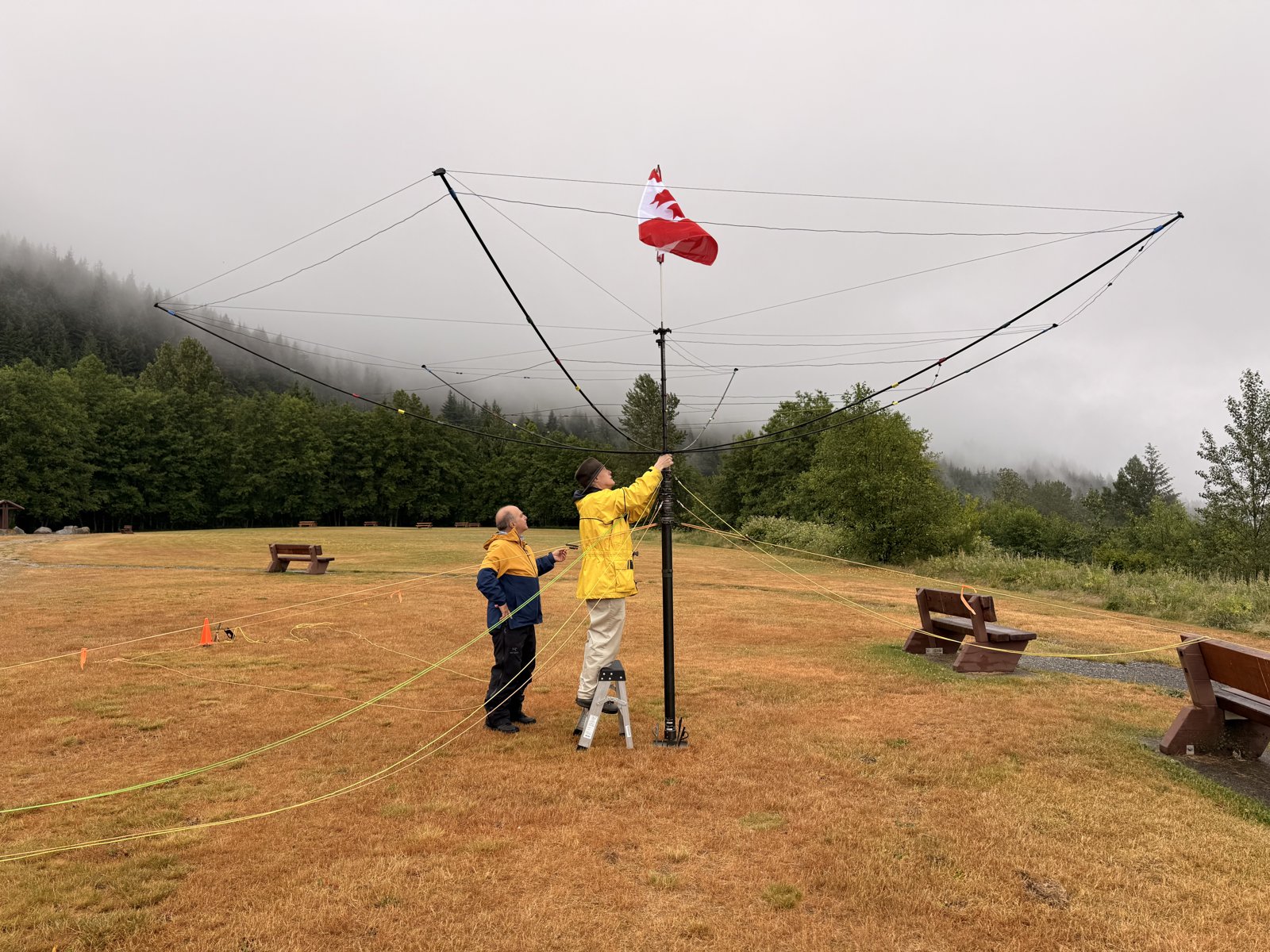
The Friday setup crew consisted of:
- Myself, Adam (VA7KRZ)
- Igor (VE7AXO)
- Bernie (VE7BR)
- Janice (VA7JMO)
- Vince (VE7NZO)
- Randy (VE7WTM)
- Heather (VE7HEA)
- Bob (VE7RPX)
Marsha accompanied Randy throughout the setup activities.
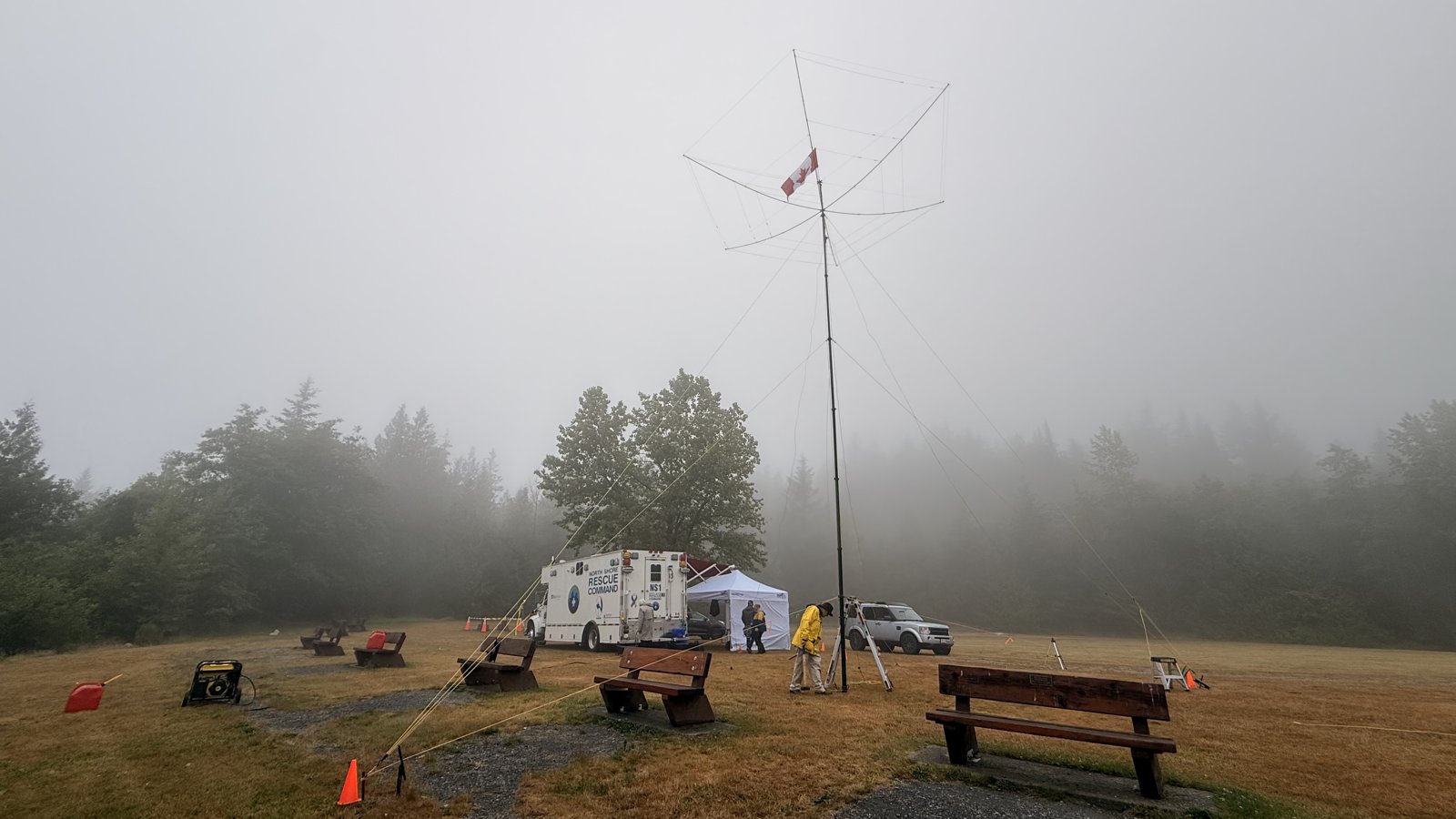
Despite the on-and-off rain and wet conditions, we worked efficiently to establish the operating position. Guy lines were installed, antennas were erected, tents assembled, and the operating position gradually took shape between showers.
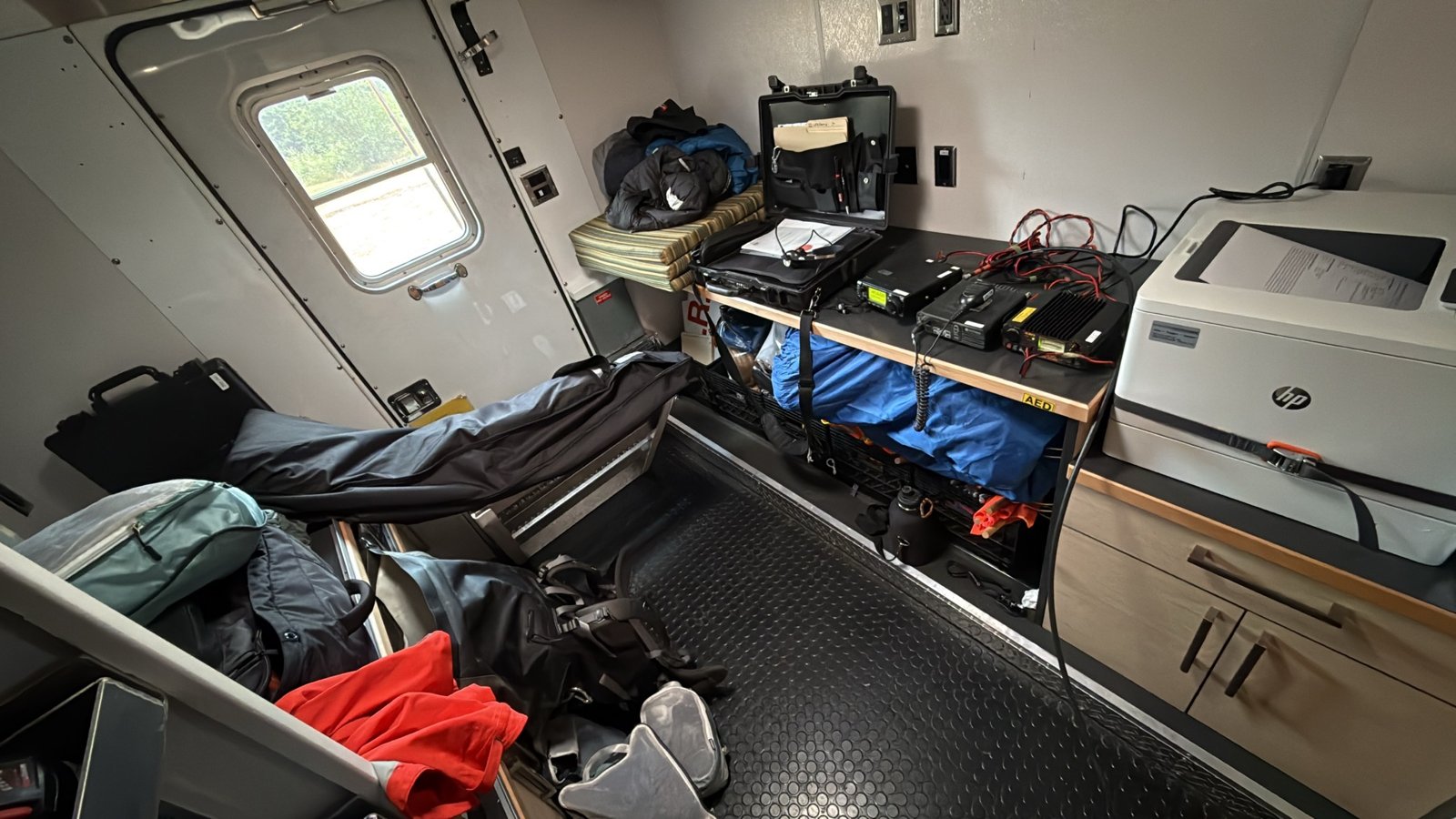
With the station secured for the night, I bedded down in the back of the NS1 command vehicle to keep watch over the site, the first of two nights I would spend on overnight security duty. Randy (VE7WTM) and Marsha also stayed Friday night to help with site security.
Station Setup
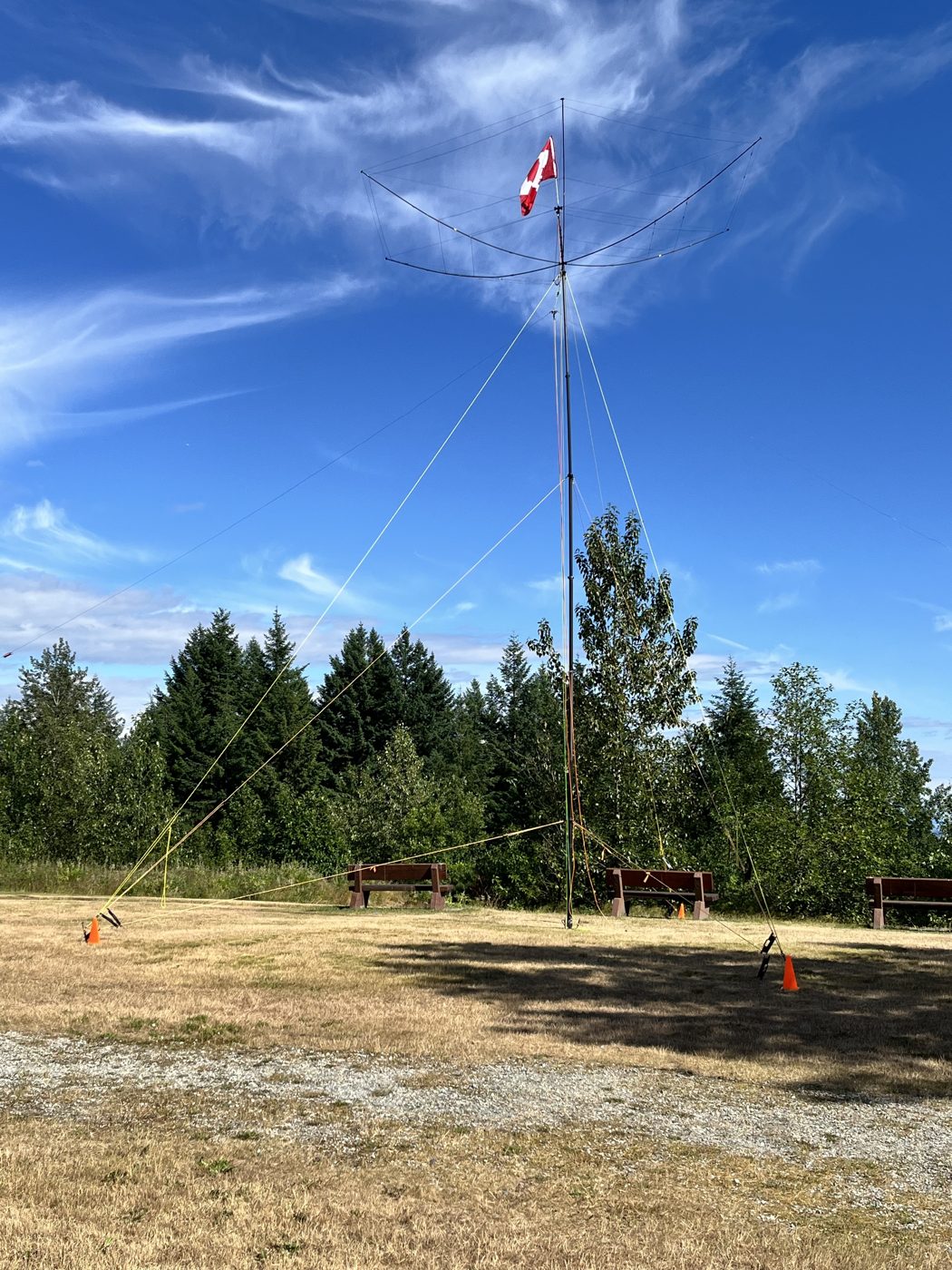
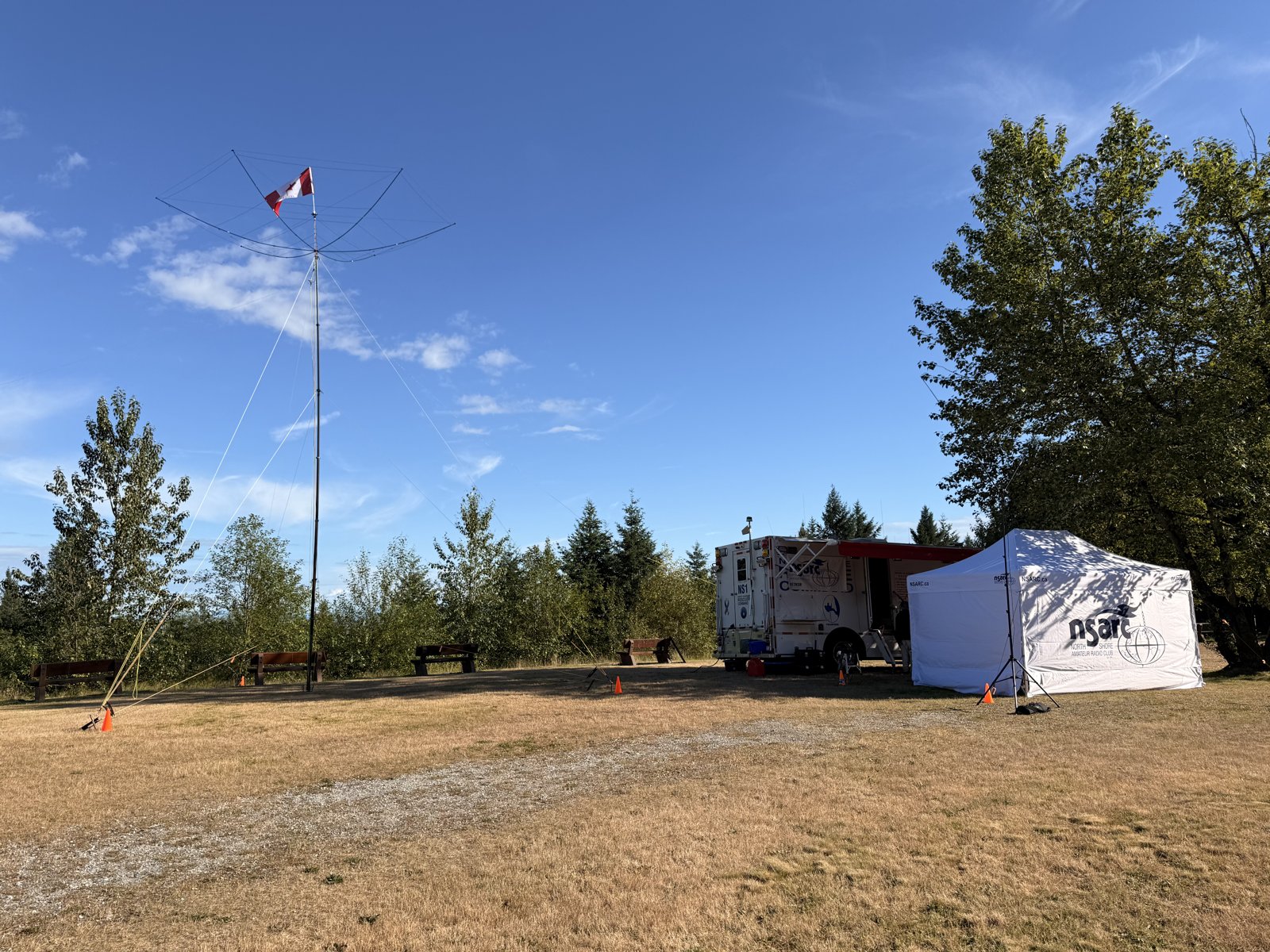
Without the club’s tower trailer, this year’s Field Day station centred around a compact but capable portable antenna system.
Nick (VA7NRM) supplied his BuddiHEX hexbeam, configured for the 20-, 15-, and 10-metre amateur bands. Mounted on a telescoping mast and guyed in three directions, it provided directional coverage on the higher HF bands while remaining quick to transport and assemble.
To complement the beam, a wire dipole for 40 and 80 metres was pullied up to the top of the mast, with the ends tied off to the park benches, providing reliable lower-band coverage throughout the event.
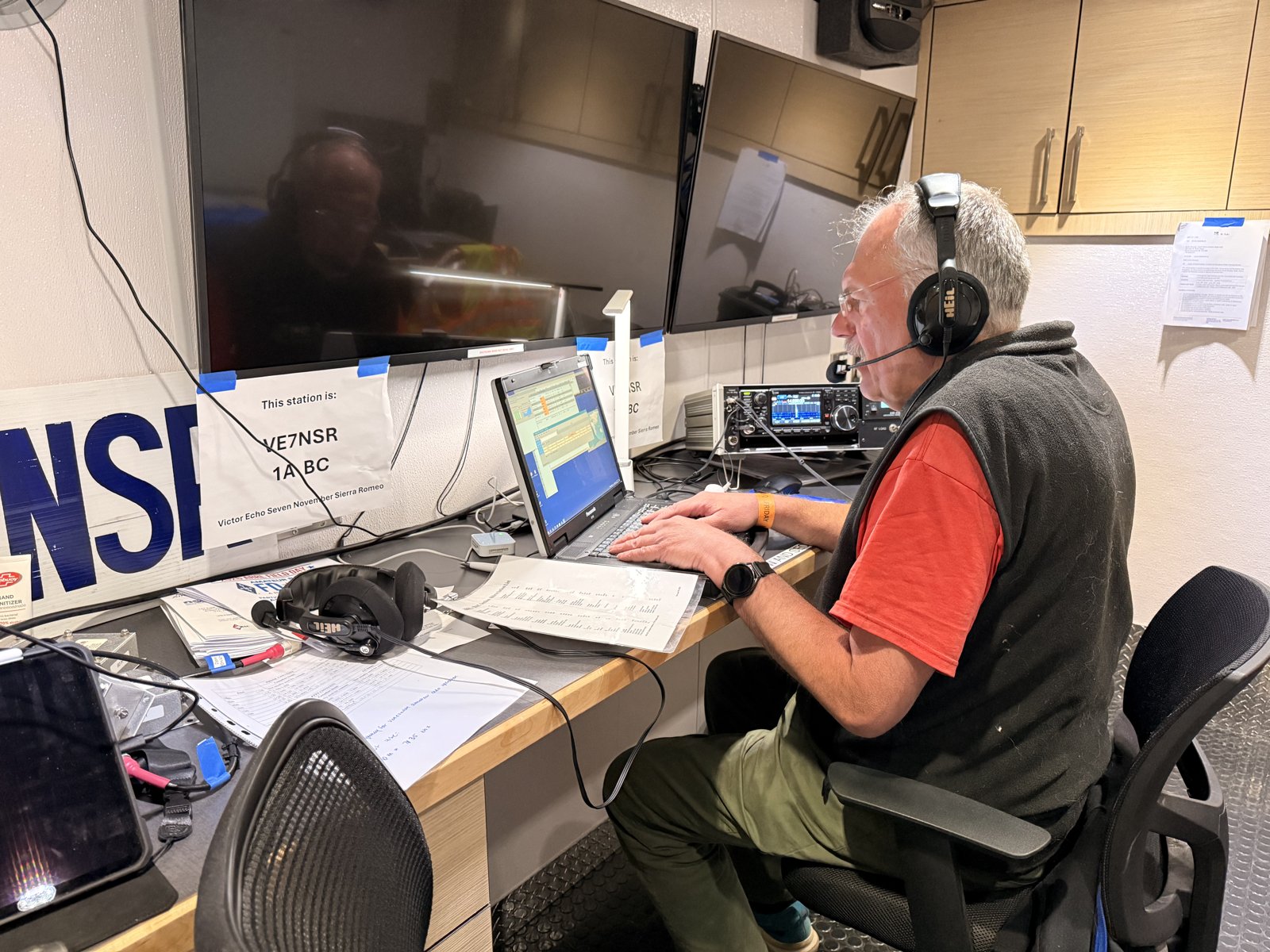
The operating position consisted of a single Icom IC-7300 transceiver housed in a portable operating case with integrated power supply. Although we ran only one HF station, the antenna system gave us excellent coverage from 80 through 10 metres.
Nick had the operating position well prepared. He set up the laptops with N1MM Logger+, prepped the radio along with a backup radio, and brought the antenna analyzer plus all the tools, cables, and filters required to pull it all together.
The site also kept a VHF/UHF base station on the air throughout the weekend. Janice (VA7JMO) provided a Comet VHF/UHF antenna, which fed my IC-706MkIIG set up in the back of the truck beside my bunk.
Powering the Station
Primary power came from the club’s new Champion generator. Using newly purchased 30-amp 240-volt twist-lock extension cords, the generator connected into the NS1 power system, charging the truck’s lead-acid batteries and providing pass-through power to the lights and receptacles.
Halden (VE7UTS) also brought up solar panels and a pair of lithium batteries, which he charged throughout the weekend and connected directly to the radio. This let us make solar-powered contacts and run brief sessions without the generator, conserving fuel and keeping the noise down around the site.
Before Field Day began, we checked every antenna using a RigExpert AA-600 antenna analyzer. Measured results were:
| Band | Centre Frequency | Minimum SWR | Sweep |
|---|---|---|---|
| 80 metres | 3.800 MHz | ~1.3:1 | 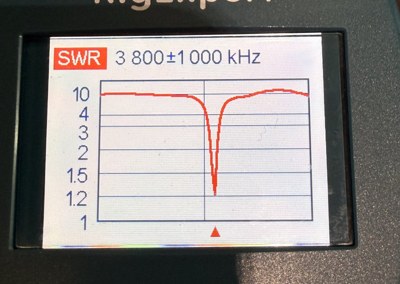 |
| 40 metres | 7.200 MHz | ~1.1:1 | 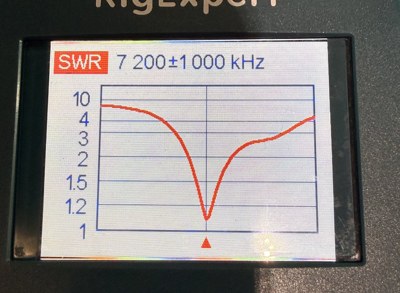 |
| 20 metres | 14.200 MHz | ~1.05:1 | 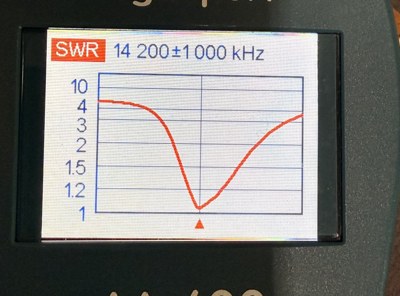 |
| 15 metres | 21.525 MHz | ~1.6:1 | 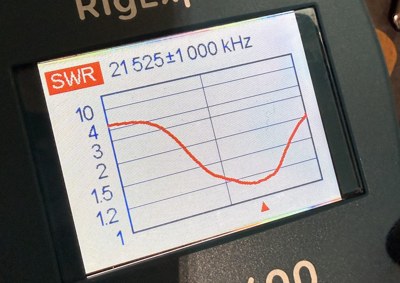 |
| 10 metres | 28.900 MHz | ~1.6:1 | 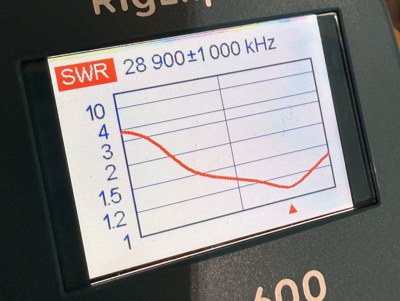 |
The measurements confirmed excellent tuning, and only minimal adjustment was needed before we put the station on the air.
The NSARC Tent
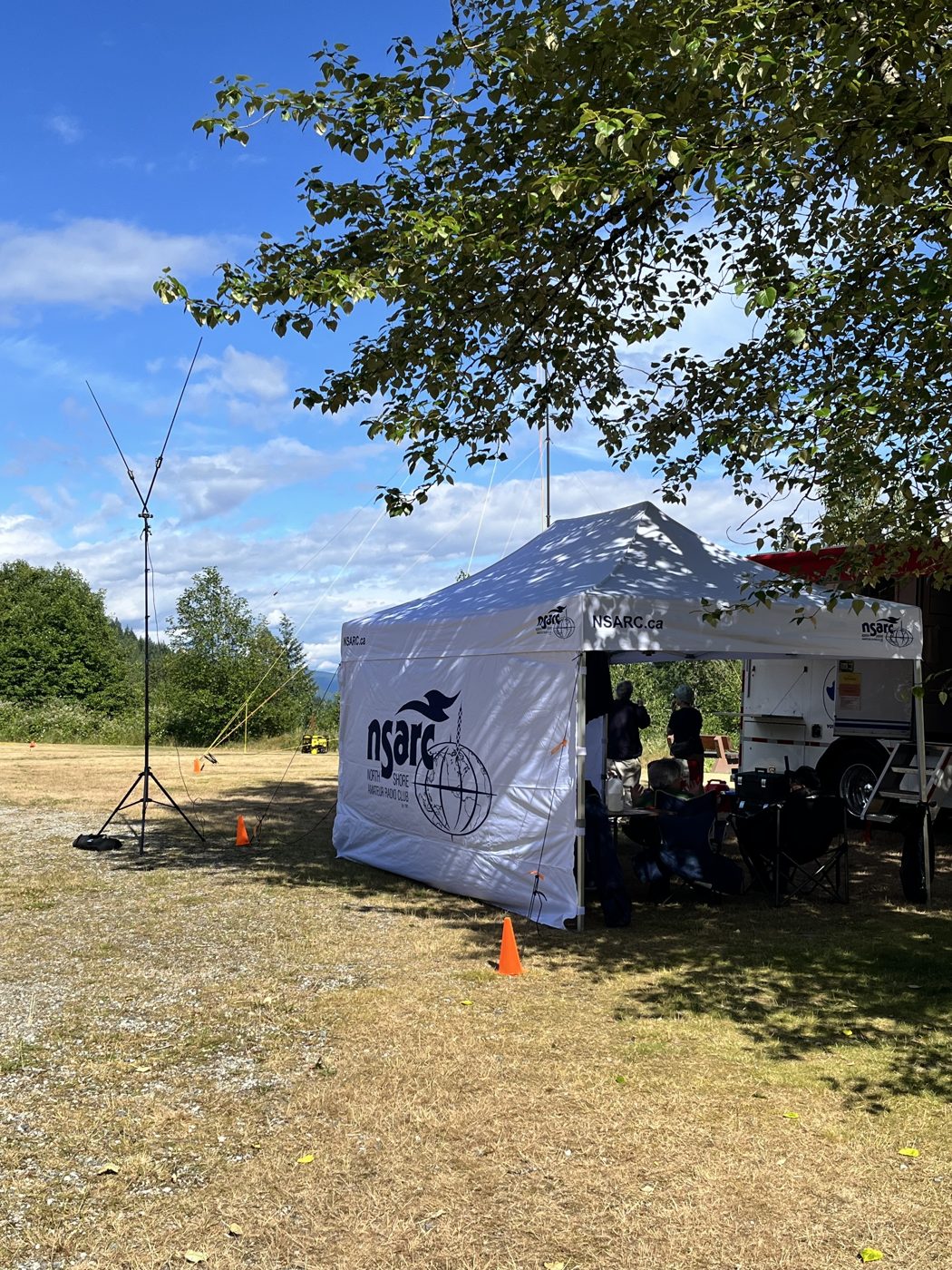
One of the most noticeable features of this year’s Field Day site was the club’s NSARC event tent. Displaying the club’s logo, name, and website, it quickly became the focal point of the operating site.
Besides providing welcome shelter during Friday’s showers, the tent became the gathering place for operators, volunteers, family members, and visitors throughout the weekend.
After several hours of working in the rain, we all gathered beneath the tent to enjoy pizza, warm up, and relax before Field Day officially began. Throughout the weekend it remained the social centre of the site whenever we stepped away from the radio. It was also the setting for many discussions about MeshCore, AI technology, and Vince’s Elecraft demonstration. Vince set up his own dipole on a tripod and put his Elecraft on the air for the demo.
Saturday – On the Air
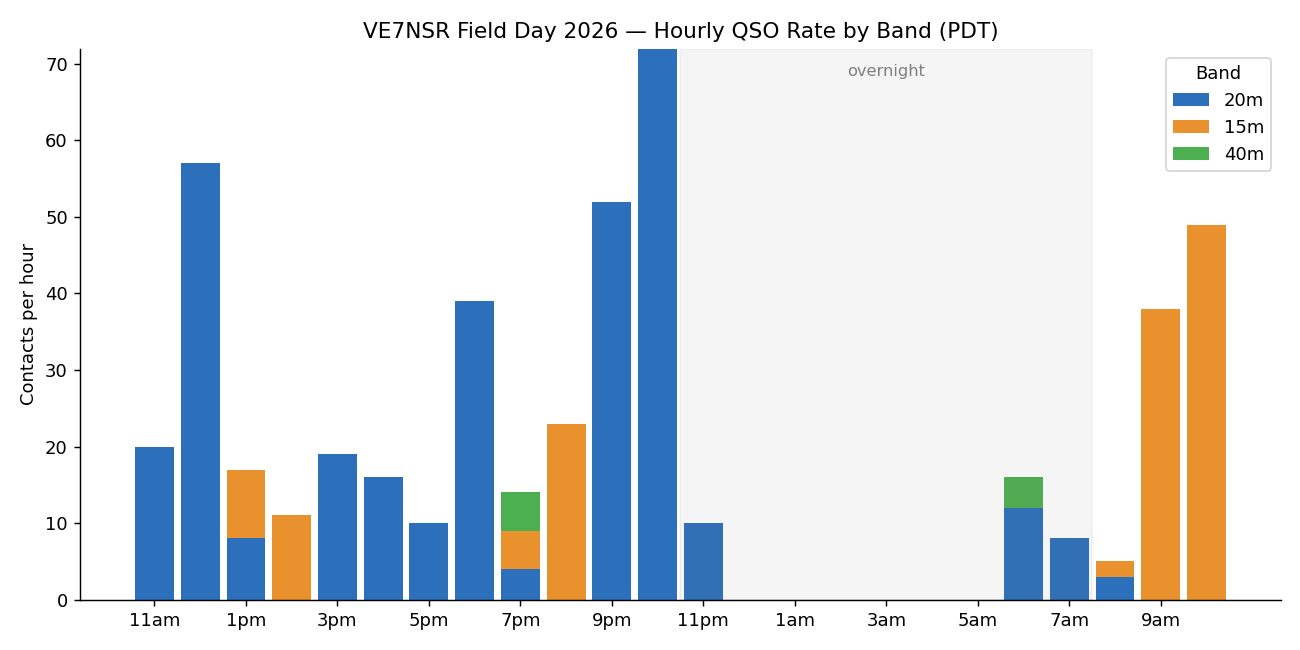
At 11:00 AM sharp, Field Day began and the bands came alive. We opened on 20 metres, and our first contact, AG7MI, a 4A operation in Oregon, was in the log by 11:02 AM, just two minutes after the start.
Rather than following a formal operating schedule, we ran the station on an informal “tag-in, tag-out” basis, with members rotating through the hot seat as they arrived throughout the day.
Halden (VE7UTS) and I worked the radio in tandem, trading off between operating and logging, while Erica (VA7QER), Janice (VA7JMO), and Jan (VE7EE) each took turns in the chair throughout the day. The approach kept the station active while giving everyone a chance to operate, whether making phone contacts or working CW.
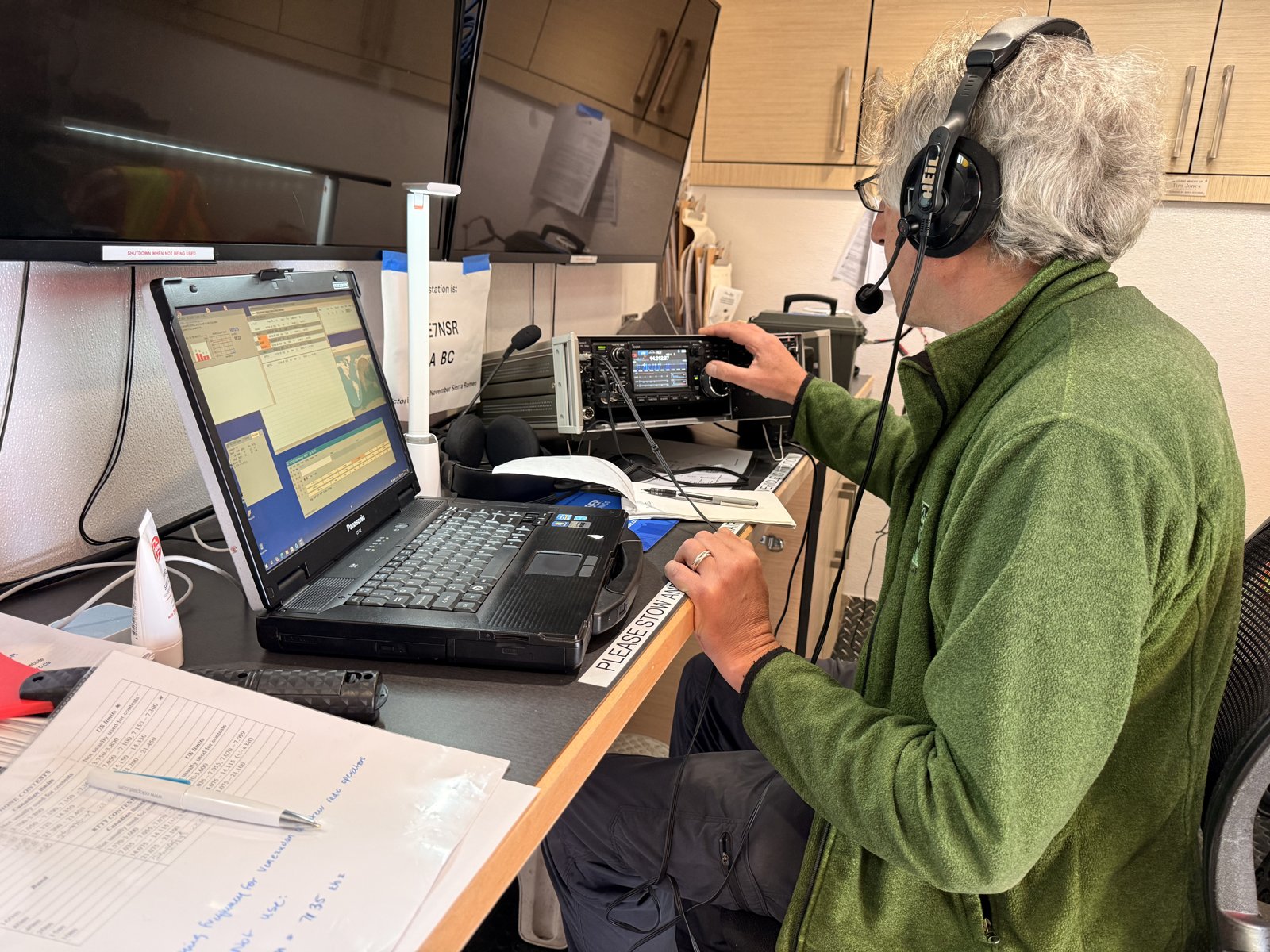
As evening settled in, Jan took over the operating position and ran a steady stream of voice contacts until about 1:00 AM, logging 82 QSOs between 10:00 PM and the time the station finally went quiet. Matt (VE7MGU), Jason (VA7OSA), and I stayed on site overnight, and I once again bunked in the back of NS1. The night passed quietly.
Sunday – Final Operating Period
Sunday morning brought a small change to the operating position.
At approximately 8:00 AM, Halden (VE7UTS) and Matt (VE7MGU) relocated the radio station beneath the NSARC event tent, creating a comfortable outdoor operating position.
Matt spent the morning in the hot seat working phone contacts before handing the radio over to Halden, who switched to CW and added a number of Morse code contacts to the log.
As the operating period drew to a close, Jan (VE7EE) took over the operating position and finished the event in style with a 46-contact run on 15-metre phone over the final hour, made entirely on Halden’s solar-charged battery power. The last contact, VE7WJ here in BC, went into the log right at the 11:00 AM close. That closing run also comfortably qualified us for the 100-point natural power bonus, which requires only five such contacts.
Results
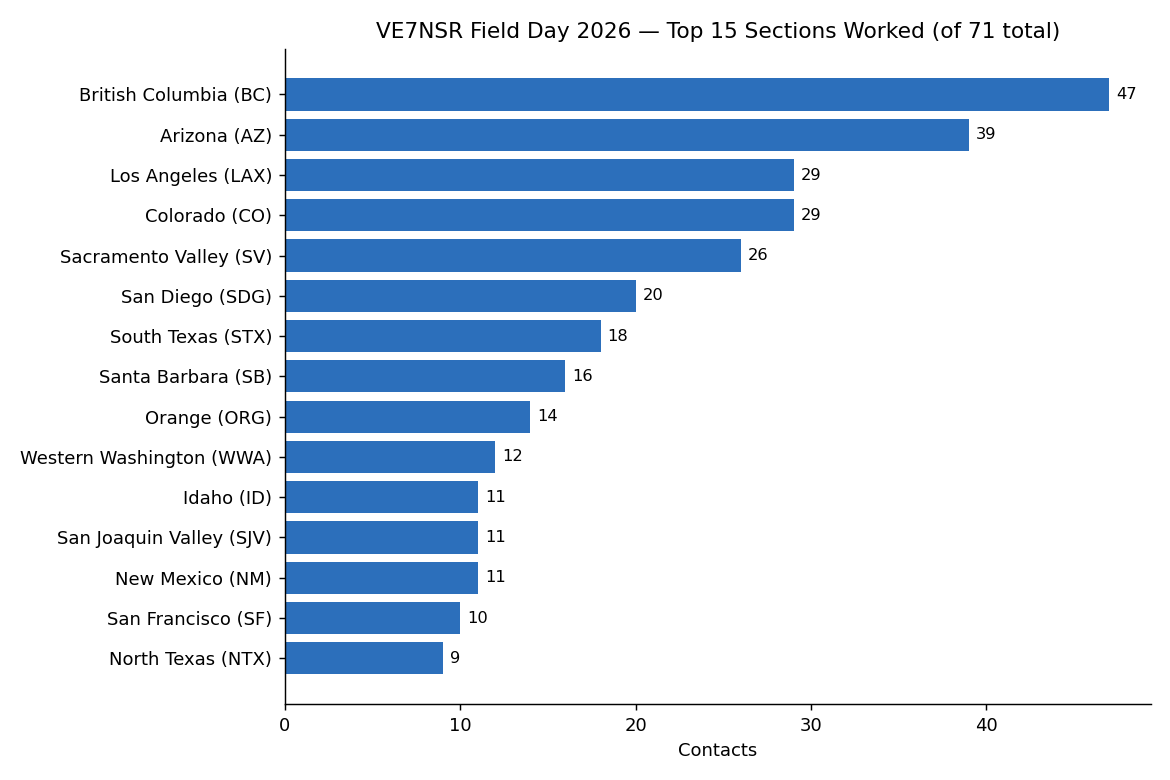
By the end of the 24-hour operating period, our single IC-7300 had logged 478 contacts with 441 unique stations across 71 ARRL and RAC sections, an impressive total for a one-radio, low-power portable station.
We had seven operators over the weekend: myself (VA7KRZ), Halden (VE7UTS), Janice (VA7JMO), Vince (VE7NZO), Erica (VA7QER), Matt (VE7MGU), and Jan (VE7EE). In total, 19 club members and 10 visitors took part in the weekend.
| Operator | QSOs |
|---|---|
| Jan (VE7EE) | 183 |
| Halden (VE7UTS) | 169 |
| Matt (VE7MGU) | 42 |
| Adam (VA7KRZ) | 42 |
| Janice (VA7JMO) | 29 |
| Erica (VA7QER) | 7 |
| Vince (VE7NZO) | 6 |
Halden’s CW work paid off handsomely: 106 Morse code contacts at two points each, accounting for over a third of our QSO points despite being less than a quarter of our contacts.
Contesting Statistics:
| Band | Mode | QSOs | Points | Pt/Q |
|---|---|---|---|---|
| 7 | LSB | 9 | 9 | 1.0 |
| 14 | CW | 46 | 92 | 2.0 |
| 14 | USB | 284 | 284 | 1.0 |
| 21 | CW | 60 | 120 | 2.0 |
| 21 | USB | 79 | 79 | 1.0 |
| Total | Both | 478 | 584 |
With the low-power multiplier, our claimed score is 1,168 points, plus bonus points including the 100-point natural power bonus earned during Sunday’s solar-powered closing run.
Twenty metres was our workhorse band, producing 330 of the 478 contacts. Coverage was strongest across the western half of the continent, with British Columbia, Arizona, Los Angeles, Colorado, and the Sacramento Valley topping our section counts, but the log stretches from coast to coast, including contacts into Georgia, Virginia, Tennessee, and Florida. Among the stations we worked was a massive 25-transmitter Class A operation.
Teardown
Once the operating period ended, teardown began immediately.
With the radio already set up outside under the tent, cleanup went very quickly, since we had been able to disassemble and clean up the truck ahead of time. Antennas were lowered, feed lines coiled, equipment packed, and vehicles loaded before the site was restored to its original condition.
Helping dismantle the station were:
- Myself, Adam (VA7KRZ)
- Vince (VE7NZO)
- Igor (VE7AXO)
- Nick (VA7NRM)
- Jan (VE7EE)
- Jason (VA7OSA)
- Matt (VE7MGU)
- Randy (VE7WTM)
- Janice (VA7JMO)
I headed out just after NS1 was picked up. Randy came by afterward with his trailer to load up the equipment and return it to the NSARC container, while Nick took the radios and computers back to the radio room.
Acknowledgements
Field Day 2026 once again demonstrated what makes the North Shore Amateur Radio Club such an outstanding organization. Despite a wet setup day and logistical obstacles leading up to the event, the willingness of members to volunteer their equipment, time, and expertise ensured another successful weekend.
Special thanks go to:
- Janice (VA7JMO) for organizing the permits, arranging the NS1 truck, and providing the Comet VHF/UHF antenna.
- Igor (VE7AXO) for providing temporary storage for the club equipment before Field Day.
- Nick (VA7NRM) for supplying the BuddiHEX antenna and for prepping the entire operating position: laptops with N1MM, the radio and backup radio, analyzer, tools, cables, and filters.
- Halden (VE7UTS) for the solar panels and lithium batteries that gave us quiet, fuel-free operating sessions and our natural power bonus contacts.
- Randy (VE7WTM) for supplying his trailer and returning the equipment to the club container.
- North Shore Rescue for the use of the NS1 Command Vehicle as the communications truck.
- Everyone who volunteered during setup, operation, and teardown.
As always, Field Day proved to be much more than a radio operating event. It gave us the chance to practice emergency communications, experiment with portable station design, mentor operators, welcome visitors, and strengthen friendships within the amateur radio community. Regardless of the final score, the success of the event was truly a team effort, and I’m grateful for the support and collaboration of everyone who took part.
Another great Field Day under our belts.
Adam Kriz
VA7KRZ